Mostrando entradas con la etiqueta renewable energy. Mostrar todas las entradas

lunes, 14 de marzo de 2011

Solar Energy, a sustainable alternative for the future


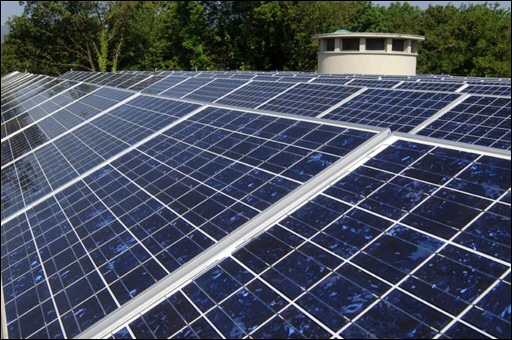
The sun is the source of energy for billions of people, if governments are committed to creating photovoltaic markets, the report "Solar Generation" by Greenpeace. (18/10/2001).

The sun is the source of energy for billions of people, if governments are committed to creating photovoltaic markets, the report "Solar Generation" by Greenpeace. (18/10/2001).

Solar power could provide electricity to more than one billion people, creating approximately 2 million jobs by 2020 and reach 26% of global energy needs by 2040, according to a report released today in Berlin by Greenpeace and the European Photovoltaic Industry Association (EPIA).

The solar energy in the future

The report "Solar Generation" shows that solar PV has the potential to make a large contribution to both the future of world energy supply security and to help avoid the danger of climate change. "It's a realistic and achievable goal, based on the state of the industry and market opportunities that exist today, but requires a clear political support from governments around the world," said Sven Teske, energy expert Greenpeace. "We need a massive boost to renewable energy sources if we are to eliminate fossil fuels that threaten our climate."

"We have a clear signal from governments that there is a political commitment to increase the role of solar electricity in the energy mix. In particular, the Commission should ensure that national innovation systems of incentives for solar electricity not be invalidated by the competition policy, "said Jose Luis Garcia Ortega, responsible for Spain Greenpeace Solar Project and the ecology.

"Greenpeace calls on governments to provide renewable energy to two billion poorest people the world over the next ten years. Even using conservative estimates, the report shows that solar energy can cover much of this demand, and create millions of jobs worldwide. "
EPIA, which represents 54 major European solar companies, is responding to this challenge to strengthen its role as global advocate for solar energy.

Ecology Solar energy

The report shows that by 2020 the global solar production would be 276 terawatt-hours, which could equal 30% of the energy needs of Africa, or 10% of the demand for European OECD countries, or 1% of global demand. This would replace the energy produced by 75 new coal power plants and prevent the emission of 664 million tonnes of carbon dioxide. Solar infrastructure investment would be worth of 75 billion dollars a year, and lower the cost of solar modules, $ 1 per peak watt.

By 2040, global solar production could be over 9,000 terawatt-hours, or 26% of expected global demand, which would have increased from 27,000 to 35,000 terawatt-hours. This production exceeds the combined demand of the European OECD countries and North America in 1998 and the solar energy.

Renewable technologies, which use energy not only the sun but also wind and water, generate clean energy and will end or cause the accumulation of greenhouse gases that cause climate change.

martes, 20 de octubre de 2009

Hotels also are converted to renewable energy

Soon be launched in Chile the first hotel that works 100% on solar power, while elsewhere in Latin America is already bearing resorts rates of "carbon neutral".
The energy saving and low carbon footprint are concepts that are already reaching the hotel business, and this line is that adopting them means a reduction in operating costs as well as a plus marketing level.

The first example delivers local gallery hotel, just deploy technology for solar water heating, which in practice will mean a saving in energy consumption 80%.

This is how Marco Torres, Head of Chilectra eco-energy, which states that have already detected the interest of other hotel companies to implement this technology in their facilities.

"There are several projects we are working with some companies and not only in Santiago, so we are already at the level of budget and negotiations," he says.

Thompson states that in Galerias Hotel is the first in Chile to operate on solar power, there are 90 collectors installed on the roof of the enclosure, which will reduce annual spending on energy consumption of $ 59 million to $ 11 million approximately.

It is important to record though, that during the first 3 to 5 years of operation of the system could only recover the initial investment, while during the 15 years remaining useful life of the collector collected projected profits.

The Head of eco-energy Chilectra adds that with these measures the hotel center eliminated the use of gas in their units and with it emissions of CO2 to the environment, which is strategic for the company in terms of marketing.

"For the hotel industry, in addition to being profitable is a plus installation of this type of system-level marketing, and indeed Galeries has planned a launch to show this conversion to their customers and the general public," says Torres.

ANOTHER EXAMPLE IN PERU

The Inkaterra hotel complex is also another case of Latin America showing its transformation to sustainable business development, and actively working to keep carbon neutral rates.

This is pointed Jose Koechlin von Stein, Chairman of Inkaterra, adding that they promote sustainable tourism through Inkaterra Machu Picchu, in the heart of Andean cloud forest, the Inkaterra Reserva Amazonica, along the Madre de Dios River in the Amazon rainforest and the Inkaterra La Casona, a few steps from the Plaza de Armas in Cusco.

This pioneering work in South America has allowed them to receive support from the International Finance Corporation World Bank Group, the Global Environmental Facility of the United Nations, and the National Geographic Society.

Thanks to these funds in their resorts promote the use of clean technologies, directly and indirectly protect the forests with the respective offset carbon emissions and teach their guests how to offset the CO2 emitted individually.

"We know that tourists travel because for a unique experience and be a better person, so we offer a trip which is in contact with nature and learn about the natural riches of Peru," said Jose Koechlin Von Stein.

She adds that in Inkaterra Machu Picchu Hotel, for example, not only aims to show guests the imposing work of man but also the environment in which it is constructed this World Heritage Site.

"The Incas built there, although it was a place of difficult access, because for them it was a beautiful natural environment and that's what we tell the tourists too."

martes, 13 de octubre de 2009

Renewable energy can generate 8 million jobs

Around 6.9 million people could work in the renewable energy sector and 1.1 million jobs would be created due to the increased efficiency of electrical appliances.

This is reflected in the report "Working for the weather. Renewable energy and the (R) evolution of green jobs," prepared by Greenpeace and the European Council on Renewable Energy (EREC), which shows that in Spain would have at least 170,000 jobs in the industry if one hundred percent renewable electricity was in 2030.

To this we must add at least another 18,000 jobs created by energy efficiency and renewable technology from dedicated to the export, which could be about 200,000 more.

Therefore, the environmental organization has asked the prime minister, José Luis Rodríguez Zapatero, to defend a model of development based on renewable energy in the meeting to be held today with the U.S. president, Barak Obama.

Renewables would employ 6.9 million people by 2030, "if world leaders seize the opportunity to invest in a greener future by ensuring a strong treaty on climate summit to be held in Copenhagen in December.

"It is time that world leaders, starting with Zapatero and Obama's speeches leave empty of content and lead the urgent action against climate change," said Juan Lopez de Uralde, director of Greenpeace Spain.

According to Sven Teske, energy expert of Greenpeace International and author of the report, said: "For every job lost in the coal, the energy revolution creates three new jobs in renewable energy. We can choose jobs and green growth or unemployment, and collapse social and economic development ".

Change coal with renewable energy for electricity generation not only avoid the emission of ten billion tons of CO2, but it would create 2.7 million jobs over 2030, that continued with the current energy system, the report said.

By contrast, the coal industry, which currently employs about 4.7 million people worldwide, will reduce more than 1.4 million jobs by 2030, due to rationalization measures in the mines today.

"Renewables have come to give direct employment to over 80,000 people in Spain, but the refusal of the Government reservation policy has caused many of those jobs are lost," Greenpeace complaint.